- Home
- Features Index
-
Features
Features
The Legacy of Shibasaburo Kitasato, First Dean of the Keio University School of Medicine
2025/11/24
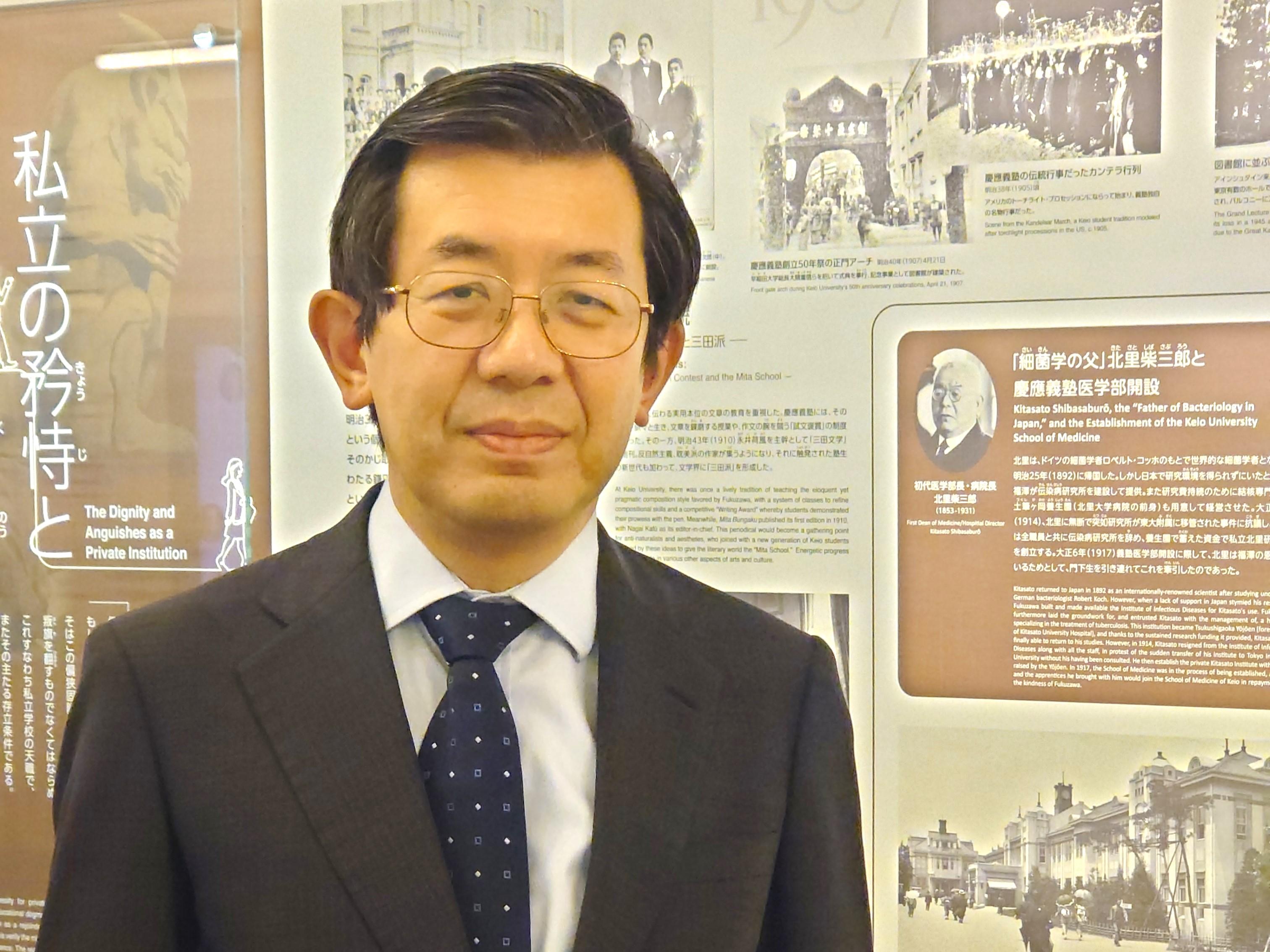
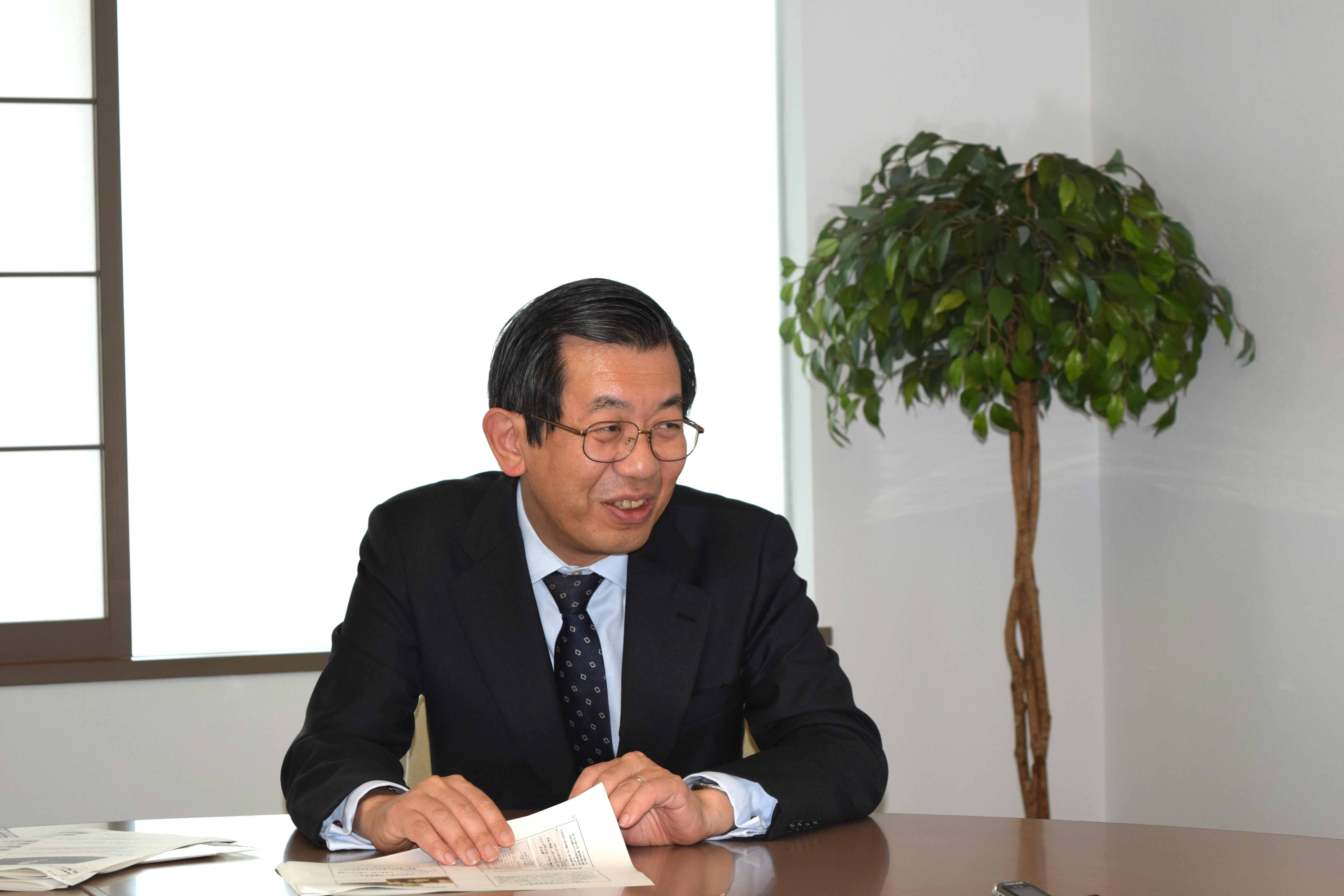
Shibasaburo Kitasato, whose portrait appears on the new 1,000-yen banknote issued in July 2024, is known as the “father of modern Japanese medicine” for his pioneering achievements in bacteriology. After returning to Japan from his studies in Germany, and influenced by Yukichi Fukuzawa, Kitasato founded the Department of Medicine at Keio University in 1917 and became its first chair, later serving as dean. Here, we speak with Professor Keita Yamauchi, a specialist in the history of Keio University, who teaches at the Faculty of Nursing and Medical Care and is a member of the Fukuzawa Memorial Center for Modern Japanese Studies, to explore how Kitasato’s vision has been carried forward to the present day.
Breakthroughs in Bacteriology, Born in Germany
Shibasaburo Kitasato, whose portrait now appears on Japan’s new 1,000-yen banknote, is once again in the public eye. But how did someone who was not a Keio alumnus become the first dean of Keio’s School of Medicine? To begin, let us look back on his career and the achievements that defined him as a medical researcher.
Kitasato was born in 1853 in what is now Oguni, a town in the Aso District of Kumamoto Prefecture. At eighteen, he set his sights on a career in medicine, studying first at Kojo Medical School (today Kumamoto University’s School of Medicine) and later at Tokyo Medical School (now the University of Tokyo’s Faculty of Medicine). After graduating, he joined the Sanitary Affairs Bureau in the Home Ministry, eager to raise Japan’s standards of public health.
In 1886, Kitasato went to Germany to study under Robert Koch, the famed discoverer of the tuberculosis and cholera bacilli. Koch’s lab drew many of the brightest young scientists of the day. Kitasato threw himself into the work, and in 1889, he achieved the world’s first pure culture of the tetanus bacillus. The following year, he developed serum therapy. By exposing animals to small doses of toxins, antibodies could be produced, and serum containing these antibodies could then be used to neutralize toxins such as tetanus and diphtheria, preventing the disease from worsening.
With these remarkable achievements, he returned to Japan in 1892 after six years abroad. Universities in Europe and the United States offered him posts as professor and director, but at home, the academic establishment responded with indifference.
One reason was his rejection of the “beriberi bacillus” theory put forward by his senior, Masanori Ogata, while he was studying in Germany. At the time, leaders of the imperial universities—including Hiroyuki Kato, then president of the University of Tokyo, and army surgeon and famed author Ogai Mori—condemned him for “betraying his mentor” and continued to snub him after his return. We now know that beriberi is caused by a deficiency of vitamin B1, but at the time, the bacterial theory still prevailed. Kitasato challenged it head-on, publishing rebuttals in both German and Japanese. In this, he showed the intellectual honesty he had learned under Koch, a scholar’s commitment to truth, even at the cost of criticism.
Back in Japan: A Meeting with Fukuzawa, A Mission Against Disease
Despite his success overseas, Kitasato found no place for his research in Japan until Yukichi Fukuzawa stepped in. The link between them was Sensai Nagayo, Fukuzawa’s old friend from their days studying together at Tekijuku in Osaka. Nagayo had been the principal of Tokyo Medical School during Kitasato’s student years, and later became the director of the Sanitary Affairs Bureau, where Kitasato worked after graduation.
Moved by Nagayo’s plea, Fukuzawa agreed to back Kitasato’s work. He even gave up a plot of land he had reserved near Onarimon in Shiba for his own children, providing the site for what became the Institute for Study of Infectious Diseases.
Fukuzawa also enlisted support from industrialist Ichizaemon Morimura to fund the institute. When neighbors protested, fearing infection, Fukuzawa built a house next door and moved his children there to show there was nothing to fear. And in the newspaper he had founded, Jiji Shimpo, he wrote editorial after editorial to ease public anxiety.
With Fukuzawa’s backing, Kitasato launched into full-scale research at the new institute. He produced sera for outbreaks of diphtheria, typhoid, and cholera, and investigated mysterious endemic diseases across Japan. Under his leadership, the Institute for Study of Infectious Diseases quickly became the country’s leading center for infectious disease control.
In 1894, when plague swept through Hong Kong, Kitasato went there himself to investigate and identified the plague bacillus.
A Stand on Principle: Walking Out of the Institute for Study of Infectious Diseases
In 1899, the Institute for Study of Infectious Diseases was placed under the Home Ministry. On paper, the move made sense: government control promised not only research but also the training of local officials and faster response in times of epidemic.
Before the transfer, Kitasato turned to Fukuzawa for advice. Fukuzawa agreed—so long as the institute stayed under Kitasato’s command. But he warned: “The government may trust you today. Tomorrow, who knows? Never let your guard down. While the ground is firm beneath you, gather what you can.” This warning became a reality in the years following Fukuzawa's death.
In 1914, the government abruptly transferred the institute to the Ministry of Education, Science, Sports and Culture and merged it with Tokyo Imperial University. Kitasato refused to accept its decision, and when he resigned, the staff followed suit. Just a month later, he founded a new private facility—the Kitasato Institute—on the grounds of the Yojoen sanatorium.
Yojoen—formally Tsukushigaoka Yojoen—was a tuberculosis hospital that Fukuzawa established for Kitasato in 1893. He oversaw every detail, from location in Shirokane Sankocho (today the site of Kitasato Institute Hospital) to management, which he entrusted to a loyal disciple, Shigeaki Tabata. Tabata carefully built up the finances, making it possible for Kitasato to launch his institute so quickly.
Years later, at a memorial for Fukuzawa’s birth, Kitasato described his state of mind:
“Until then, I had worked in line with the principles of my predecessors, keeping my scholarship independent. But to continue under those whose policies were completely opposed to mine was impossible. To respect the independence of my work, I saw no reason to stay, least of all by bending my principles. That was the decision I made.”
The phrase he used— “bending my principles”—was one Fukuzawa often repeated. It shows how deeply Fukuzawa’s spirit of independence had taken root in Kitasato.
Carrying On Fukuzawa’s Vision: Founding Keio’s School of Medicine
Sixteen years after Fukuzawa’s death, in 1917, Keio University founded its Department of Medicine—today’s School of Medicine—with Shibasaburo Kitasato as its first dean.
At the time, Keio only offered subjects in the humanities. For years, the school had dreamed of launching programs in science, engineering, and medicine, but finances stood in the way. The chance finally came with Kitasato, whose close ties to Keio continued long after Fukuzawa’s death, making the Department of Medicine possible.
Kitasato, too, was driven by gratitude to Fukuzawa. Speaking at the 1917 memorial for Fukuzawa’s birth, he said: “Having long received the late master’s deep kindness, I consider it a great honor to serve this university, and I am resolved to give it everything I can.”
Kitasato’s disciples also played a central role in the establishment of the School of Medicine. Among the first lecturers were some of Japan’s most distinguished researchers: Taichi Kitajima (developed serum therapy for habu snake venom), Kiyoshi Shiga (discovered the dysentery bacillus), Sahachiro Hata (co-developed Salvarsan), and Mikinosuke Miyajima (parasitologist).
They agreed not to take pay until the department was on solid footing, and for a time worked entirely without compensation. Keio’s administrators urged them to accept salaries, but they refused. Those who remembered this commitment spoke of it for years after, recalling how the gratitude of Kitasato and his disciples helped drive the growth of Keio Medicine.
The Spirit of Independence at Today’s Keio School of Medicine
When Shibasaburo Kitasato became the first dean of the School of Medicine, he spoke at the opening of the school and university hospital. At the end of the prepared text—likely drafted by staff—he added a handwritten note of his own:
“The basic sciences and clinical departments must stay closely connected, working together in research. The independence of scholarship rests on independent management. Keio’s academic ethos is one of family, fully aligned with my own. Above all: no servility.”
In that final phrase—“no servility”—we see Kitasato’s resolve: never bowing to power, never flattering authority, never betraying his principles. It also expresses his wish for the ethos of Keio’s School of Medicine, a legacy he had inherited from Fukuzawa. His call for linking basic and clinical research was another hallmark of his vision for medical education, and it remains central to Keio’s approach today.
For example, from the start, Keio’s School of Medicine avoided the “numbered departments” common elsewhere. At many universities, even until recent years, medicine was divided into First, Second, and Third Departments of Internal Medicine or Surgery, often overlapping in scope but divided in policy. Keio rejected this system, staying true to Kitasato’s principles of collaboration between basic and clinical medicine and a family-like ethos that discouraged rivalry. His handwritten notes can be viewed anytime at the Keio History Museum on Mita Campus.
Though Kitasato and Fukuzawa shared less than a decade together, those years left a lasting mark: from the Kitasato Institute to Keio’s School of Medicine. The convictions Fukuzawa passed on—breaking down deference to authority and upholding the independence of scholarship—remain a guiding force today.
*In 2024, marking 107 years since Kitasato founded Keio’s School of Medicine, the university launched the Keio University School of Medicine Kitasato Human Resources Development Scholarship.
This fund supports students who, like Kitasato, bring an international outlook and pioneering vision, opening new frontiers in medicine and health care.
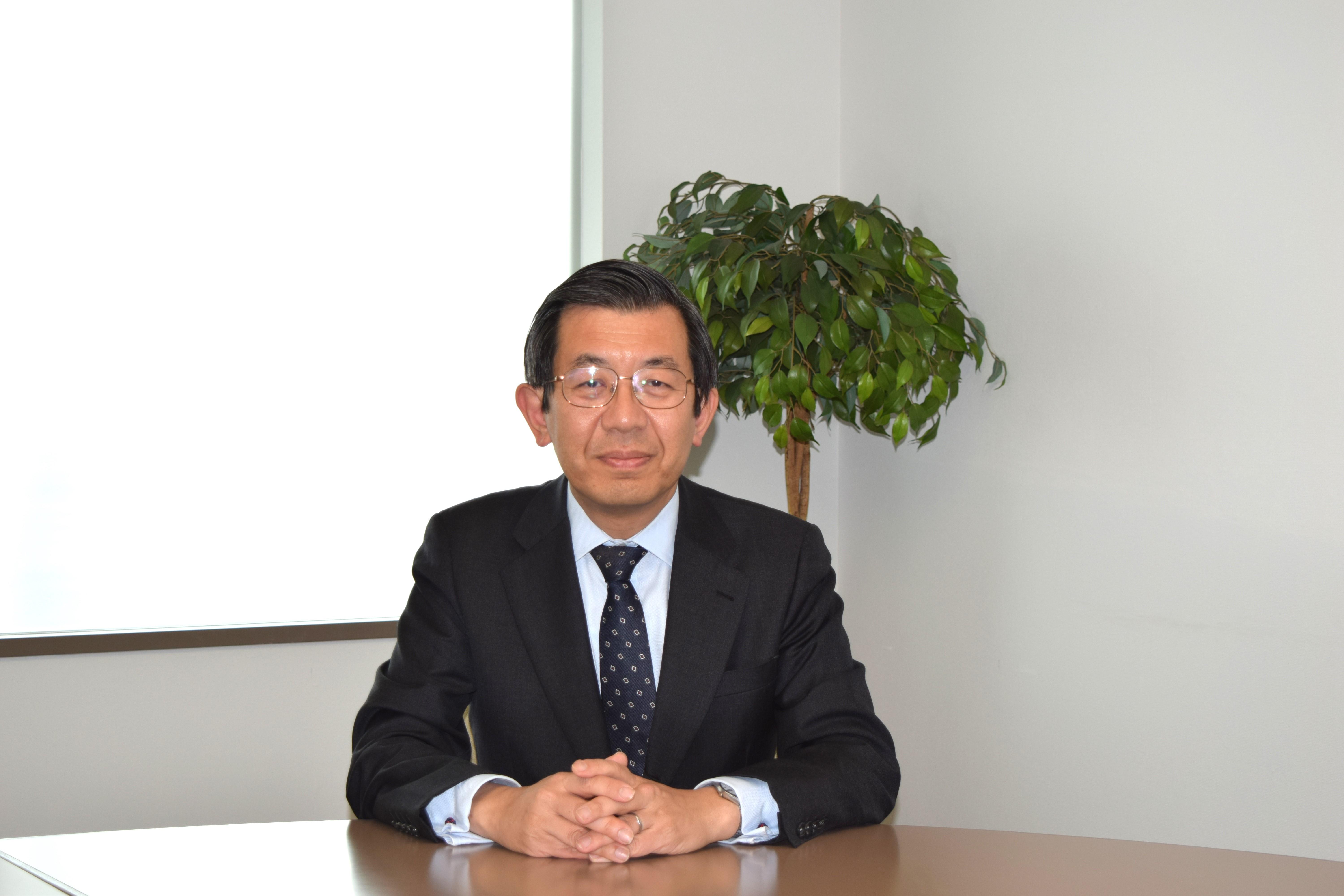
Keita Yamauchi
Vice-President, Keio University
Professor, Faculty of Nursing and Medical Care & Graduate School of Health Management
Member, Fukuzawa Memorial Institute for Modern Japanese Studies
Prof. Yamauchi graduated from the Keio University School of Medicine in 1991 and continued on to earn his Ph.D. in Medicine in 1997. After serving as an Assistant at the School of Medicine and an Associate Professor at the Faculty of Nursing and Medical Care, he was appointed Professor of the Faculty of Nursing and Medical Care and the Graduate School of Health Management in 2005. He also served as Head of the Preparatory Office and later as Director for the establishment of Keio Yokohama Elementary School. Since 2021, he has served as Vice-President of Keio University. His areas of expertise are health policy and management, psychiatry, and the history of Keio University. His edited works include Collected Works of Yukichi Fukuzawa, Vol. 5 (『福澤諭吉著作集』第5巻); Historical Walks with Yukichi Fukuzawa (福澤諭吉 歴史散歩); Historical Walks through Keio University (Campus Edition) (慶應義塾 歴史散歩 キャンパス編); Historical Walks through Keio University (National Edition) (慶應義塾 歴史散歩 全国編); and Fukuzawa Yukichi’s Educational Thought: Independence Without Isolation (福澤諭吉 教育論:独立して孤立せず), among others.
*All affiliations and titles listed are those at the time of the interview.